Understanding Our Influences

I want to state right up front that I am most definitely not an expert in painting or art history, but I have been giving quite a lot of thought lately to how some of the great portrait painters of the past had understood the basic elements of portraiture that we all need to keep learning and practicing: light, color and composition. The first two, being interrelated and the foundation of any good representational art form, are applicable to both color and B&W photography. The range of black to white tones in B&W are simply colors in a more narrow range. Composition encompasses not only the framing, the position and pose of the subjects, the background and other secondary elements, but probably most importantly it the device through which the story of the work is told.

I had the pleasure recently of visiting the new 'Art of the Americas' wing at Boston's Museum of Fine Arts. It happens to be almost in my back yard, but if you have the chance to visit Boston, it's a great museum and the new wing is pretty spectacular. The work of John Singer Sargent, which I had seen many times before, made an even bigger impression on me this time than it had in the past. It may have been because of the MFA's new presentation, but I think it probably had more to do with the thinking I have been doing about those three elements and how they apply to photographic portraiture.

As photographers, we tend to get a little provincial about what we do and how we do it, rather than looking back at how some of those who came before us did things. I think this applies to how and if we think of the great photographers of the past as well. Clearly, many of us are inspired by the greats: Ansel Adams, Karsh, Bresson, ... the list is long. But I need to constantly remind myself to not re-invent the wheel and to let those influences work their magic. I know that some people think that relying on such influences cause us to create work that is not original. Everyone begins doing what they do without already having the skills that come with education, practice and experience, but no one begins creating without having been influenced by those who came before them. Sometimes we can fail to use those influences for the good of our work though, relying on what we think is acceptable at the current time, in terms of technique and artistic sensibility. Think about the work that we might do to differing degrees that may be technically perfect, but while being esthetically current and accepted, is very uninteresting. I see photographic work all the time, as I'm sure you do, that is myopically photographic in style, where it is apparent that the artist thinks only in terms of "photographs" and not allowing any other ambient forces to enter in.

So back to Singer Sargent... The large group portrait called "The Daughters of Edward Darley Boit" is owned by the MFA, and is probably one of his most popular. It is really quite spectacular in person, being 87 3/8 by 87 5/8 inches. More impressive though is the artist's use of light, coming from a large, muted and soft source, his use of equally muted pastels, and presenting the viewer with an incredibly compelling composition. The four  subjects are placed in a triangular formation, which is pleasing at an unconscious level, and while their postures and lack of movement don't necessarily telegraph any particular story, the viewer is wondering what may be going on in that foreground, as well as deep in the dark recesses of the room beyond.


Another Sargent painting at the MFA that doesn't get mentioned much, which may have to do with the fact that it is a seemingly simple, posed portrait, rather than the environmental group portrait that is "The Daughters...". Many of these paintings do not look like much on a computer monitor, and the painting called "Mrs. Charles E. Inches (nee Louise Pomeroy)" is no exception. In person, the color and light that is cast onto the subject and into the room is truly surreal. Maybe I am just blown away by the realism of the work, although I am certainly a lover of the abstract. It fascinates me though in terms of how aware Sargent was of not simply throwing light onto a subject, but rather how he seems to have carefully crafted light that both sculpted and illuminated Mrs. Inches' face in such a way that the viewer can imagine this person and wonder about who she might have been.


One more, and I promise this is my last example, is "Lady Agnew of Lochnaw", which is owned by and currently at the National Gallery of Scotland. My recommendation is to just look at this picture. The beautiful light, the incredible colors, and the casual pose and overall composition, to say nothing of the technique...nearly perfect.

So how does this all apply to photography? I think we can get caught up in camera and lighting gear, which can be a fun, albeit very expensive preoccupation. We can also get pretty wrapped up in the frenzy of people, places and things that often accompany a photo shoot. I constantly have to tell myself to SLOW DOWN. It's not funny really. I need constant assurance that my subject is not getting impatient with me. When I can do this, I can think about my ultimate goal, which is a picture that might please me. In my work, there is good and bad, but there is also a sort of intangible quality of whether it works or does not work. There's no gray area for me on that topic. The photo must “work”. That's what I am after. So just because the light is positioned at a "correct" location, the photo is perfectly exposed, and the composition is by the book, this is all meaningless. We are not "taking" a picture, we are making one, or creating a painting with digital tools in place of paints and brushes. There are rules, but there are no rules. There's good and bad, but there's also art.

Four Nights a Week

Over the school Christmas/New Year break my wife Amy came up with an inspiration to write a new blog. She has been writing her education blog for a couple of years, but this one was to be fun and interesting, to her, and hopefully to others. The subject is healthy eating and how to cook at home, at least 4 nights a week, economically and healthily. I was the obvious choice to collaborate with her on creating photographs of the food, living there in the house as I do.

It is a cool idea, and one that I think is useful to people who want to make vegetarian food that is interesting, tasty, made from scratch and comes complete with Weight Watchers® points already calculated. Each day's post comes with an appetizing photo (hopefully) of the unadulterated, plated food. Our thinking was to create very simple, real photographs that show the dish just as we are about to eat dinner. These food shots are not 'produced', but neither are they of the 'road-kill' variety that I see too often, that make me wince.

Home made pizza

I love well-prepared food that tastes and looks great. Nothing makes me more depressed than to eat in a big-box restaurant and to be served a mountain of food. I know that restaurants in the US are pretty much forced to do that to avoid the 'tiny-portion' mockery, but to me food is about taste, not quantity. So the shots are simple in terms of gear in that I shoot hand-held, with my assistant (Amy) holding a single speed light bouncing off a sheet of white, office supply store, foam core. I could obsess with modifiers, fill-cards, etc., as I do for clients, but we want to show real, ready to eat, enticing dishes. Plus, we want to eat!

Check it out: http://fournightsaweek.wordpress.com/

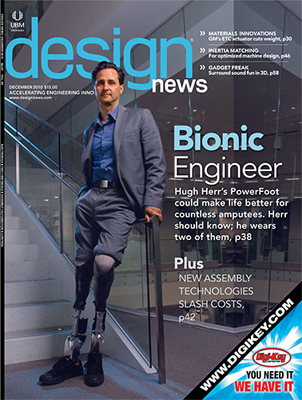
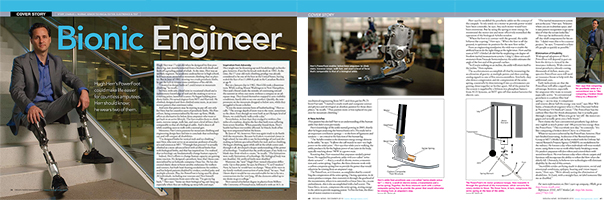
Hugh Herr in Design News

A few weeks ago I was given the opportunity to meet Professor Hugh Herr, of MIT, in order to do the cover story for the December issue of Design News magazine. Professor Herr is an incredibly interesting guy, who lectures and has been written about extensively, and who helps millions of people through his work researching and developing high tech prosthetic limbs. Our shoot took place at the Media Lab at MIT, where he and his team work. And what a great location for a photo shoot!

Click here to read the story.


It Is the Season

You wouldn't know it from my recent blogging (or lack of it), but the last 6 weeks has been really busy. The uptick is definitely a good sign, from my observation point, for the economy.  It is tough to maintain a good blogging schedule when you are shooting regularly, but it is certainly a good problem to have! Another reason is that I have shot a couple of magazine cover stories in the past few weeks that I can't talk about until they are published. That's tough too, but goes with the territory. Suffice it to say, I will be mentioning them eventually!


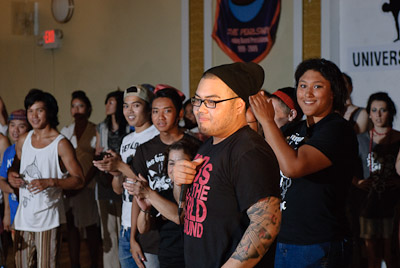
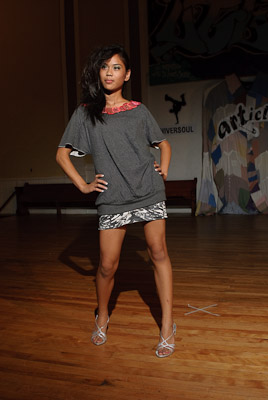
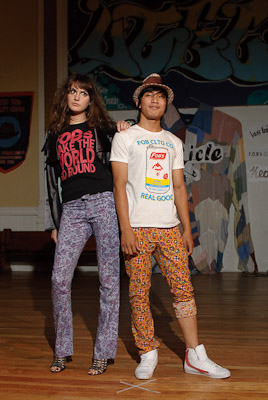
I have been fortunate enough to have participated in a couple of shoots for non-profits that were fun. One was a fashion show put on by The Revolving Museum and the United Teen Equality Center, both of Lowell, Massachusetts.


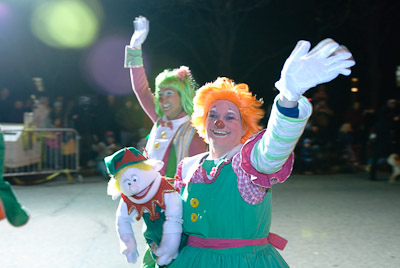
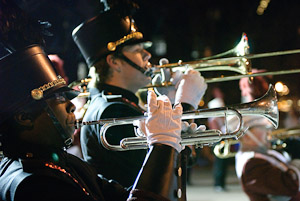
And just a few weeks ago, The Cultural Organization of Lowell asked me to photograph Lowell's City of Lights festivities, for the second year. They put on a great hot chocolate contest among local merchants, a parade, as well as many other events in downtown Lowell. It was fun, but cold!!!


In an Instant

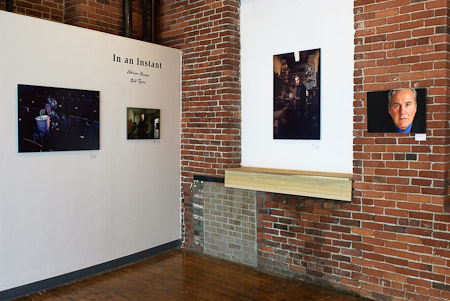
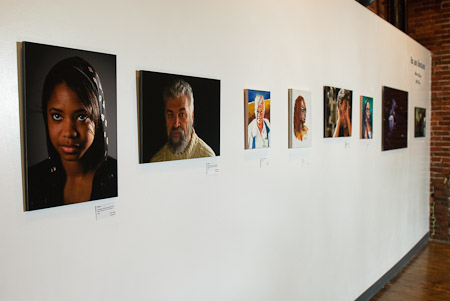
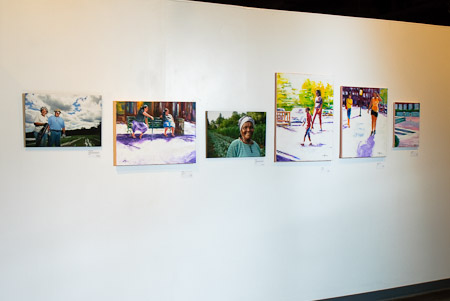
I haven't had a chance to blog is quite a while, mostly because I have been busy preparing for an exhibition that painter Bill Tyers and I are presenting at Western Avenue Studios, in Lowell, Massachusetts. We hung the show last week, opening the doors on the show last Wednesday, October 27th, 2010, so I thought I would share a couple of installation shots. We are all very happy with the show and hope that you call all make the reception, Friday evening, November 5th, from 6 to 9 PM. Please scroll down for the details. I hope to see you!

In an Instant - Adrien Bisson and Bill Tyers

In an Instant
Photography by Adrien Bisson and Paintings by Bill Tyers
October 27th - November 21st
Artists Reception: Friday, November 5th, 6-9pm


The Loading Dock Gallery
122 Western Avenue
Lowell, Massachusetts 01851


Click here for directions and a map to the gallery.

Boxing Day at CSA

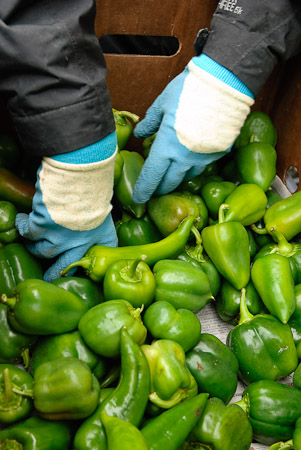
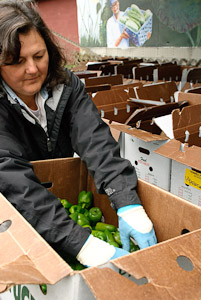
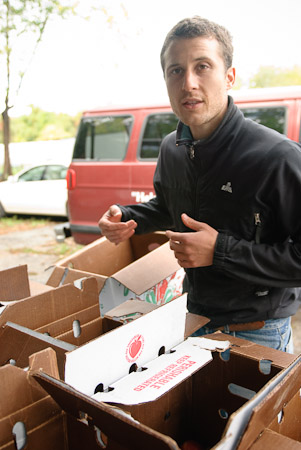
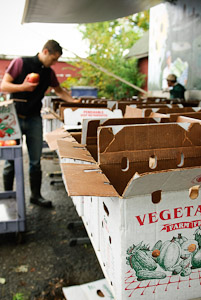
Matthew Himmel, the World PEAS (People Enhancing Agricultural Sustainability) CSA Coordinator at New Entry, here in Massachusetts, invited me to observe him and his workers boxing the Lowell CSA (Community Supported Agriculture) shares. They pack three days per week. Here in the Boston area we had torrential rains both Tuesday and Wednesday this week, and while they needed to work in the rain, under a tarp, I didn't. I wimped out and showed up on Thursday morning, the first nice day in a while. Conditions were actually pretty good for photography though; no direct sunlight and off and on clouds. And no rain!

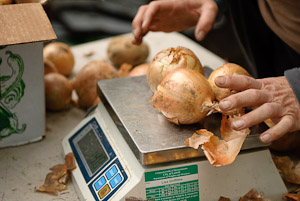
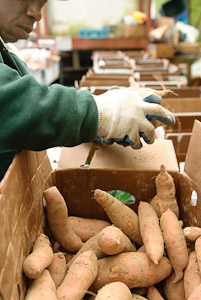
I watched and learned much about how they divide up the produce to provide CSA shareholders with their goodies. I never thought about it, but they need to weigh quite a few things and even out the contents of the boxes to make them all uniform, fair and bountiful.


I had originally asked Matthew if I could photograph him for my portrait project back in January. Things happen, so it's a good idea to plan ahead!

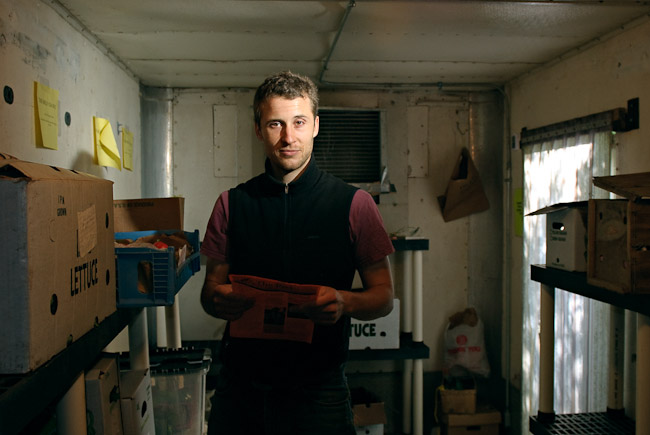
For the first few shots, he invited me to experience the refrigerator truck. After 10 minutes, the 60F outside the truck felt pretty good. But what's up with the lens fogging up? A long, beautiful summer makes you forget about those joys of cold weather photography.

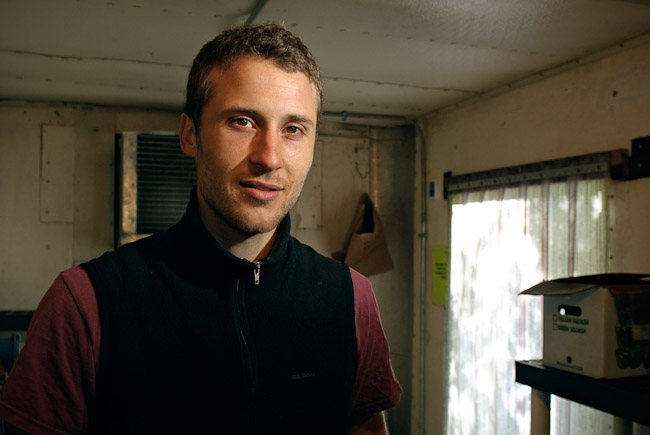
Matthew Himmel, the World PEAS (People Enhancing Agricultural Sustainability) CSA Coordinator at New Entry


People at Work - Part 11 - Make Things Happen

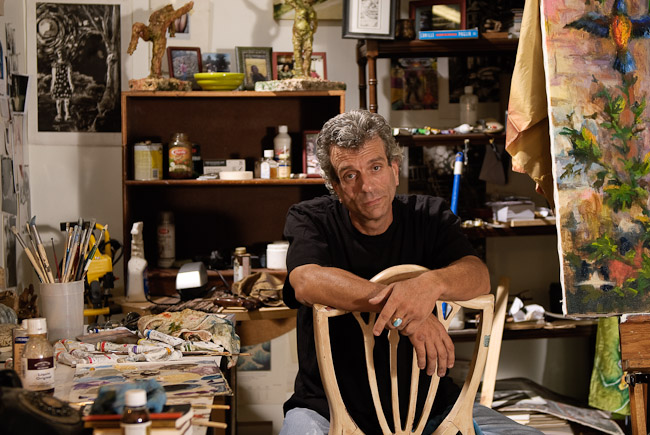
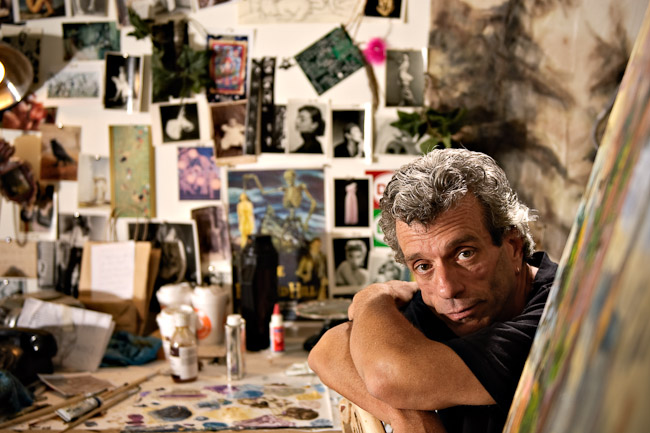
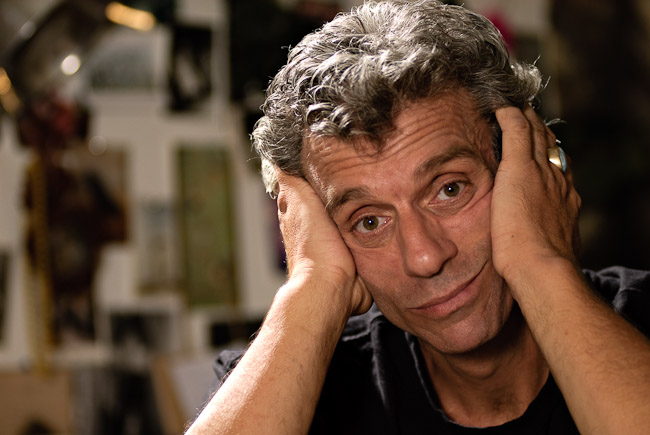
I have know multi-talented artist Glenn Szegedy for a couple of years, having photographed some of his work for his portfolio. I only recently asked him to pose for a portrait though, after wanting to ask him for some time. Things get in the way. Time passes. I have found that I need to make myself go out and flip some bits on the digital sensor occasionally and not just sit on the merits (or lack) of what I have shot in the past. It's important for me to make things happen and not wait for them to occur, because they probably won't.

I wanted to photograph Glenn in his studio because it really provides an ideal background visually, and it reflects Glenn's way of working and maybe his style. He seemed to want to straighten up, but I wanted to capture his working world just as I found it.


Artist Glenn SzegedyYou can see Glenn's work here: http://www.glennszegedy.com
You can also visit him at Western Avenue Studios in Lowell, Massachusetts.


Location Portraiture - A Small Room, One Window and One Light

I recently shot a portrait of Maureen Lanigan, the Director of the Rogers Center, at Merrimack College in North Andover, Massachusetts, for another magazine piece. The editor was really interested in getting a shot of Maureen in her office, which was nicely decorated, but very small. If you've ever tried to light someone in a small room like this, you know that it can be a challenge, especially if the walls are light. Fortunately, her office has a window, but on the day that we had scheduled for the shoot, the sky was cloudy and overcast; a typical Massachusetts day in early May. What to do?

I decided to set up a speedlight outside that window, with a shoot through umbrella. The good news was that there wasn't much wind, which was important because I was working alone, but I did have sand bags so I wasn't too worried. The bad news was that once I had the umbrella in place, it started to rain. Perfect! Unfortunately, a shoot through umbrella is not the right sort for keeping rain off the light. So I improvised with some cinefoil, making a little tent for the light. Another problem solved!

The result was a very natural, soft light coming from the side. I used a warming gel in order to give the light of the overcast day a little life, and I placed a disk reflector to the left, to bounce that window light back at Maureen. One light, a little available light, and a very natural look.


Maureen Lanigan, the Director of the Rogers Center, at Merrimack College in North Andover, Massachusetts

People at Work - Part 10 - The Power of Flowers

When I started to think about this blog I felt my "People at Work" theme was appropriate, and that it had only been a short while ago that I had pushed the pause button on that theme. So this morning I looked back and found that installment number 9 was posted on May 19th, 2009! Not possible... Anyway, here goes with number 10. Finally!

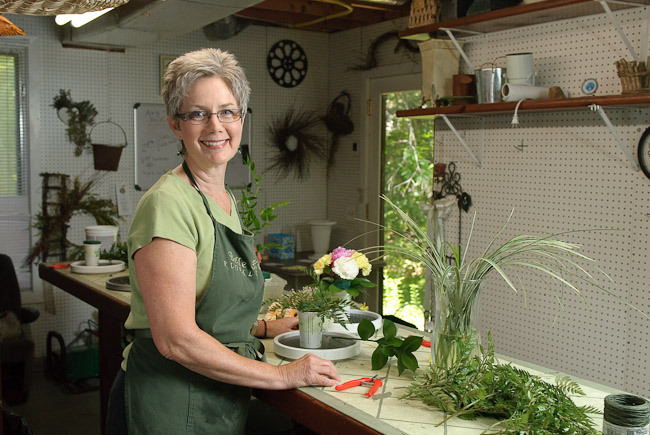
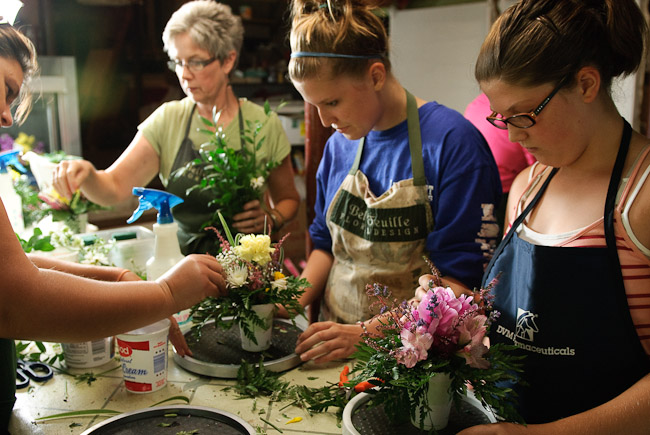
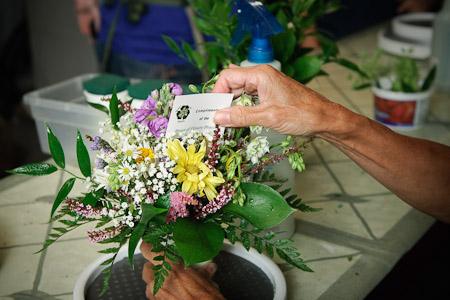
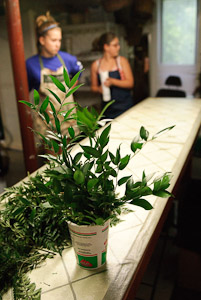
A few weeks ago I had the pleasure to photograph Joyce Bellefeuille, for the Merrimack Valley Magazine, along with some of her volunteers as they worked on her Power of Flowers project. Joyce is the owner of Belle Feuille Floral Design in Dunstable, Massachusetts. I would encourage you to check out the Merrimack Valley Magazine article, written by Anne Broyles.
Joyce Bellefeuille

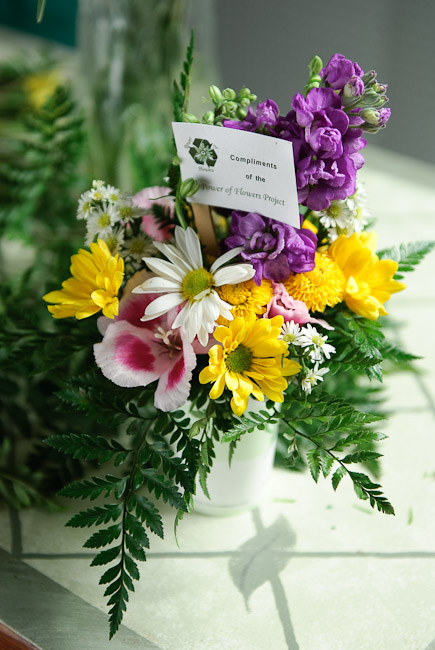
You can read lots more about it on Joyce's web site, but the project delivers free flowers, donated from funerals, weddings, banquets and church services that would otherwise be discarded, to deserving recipients chosen through community outreach programs, friends, home care organizations, elder services, senior centers and cancer clinics.


The Power of Flowers ProjectI think creating photo essays like this to go along with editorial environmental portraits, that are the basis for the articles, gives the reader a much better connection to the subject.


The magazine went out to subscribers this week and will be on newstands on September 15th. See the magazine's web site for locations.

Uniqueness - One of These Things is Not Like The Other

I've been thinking quite a bit lately about uniqueness, as it relates to visual artists - and my own work. As visual artists we need to eventually develop something that makes us different from everyone else. As students, we do all sorts of things in order to develop technical chops, including outright imitation, which is necessary and acceptable. When I was studying music at Berklee, we would transcribe entire big band arrangements (from cassettes!), copying every instrument. We were expected to refine our listening skills to the point at which we could hear each of the 4 or 5 trumpet parts and write them down.

Such an exercise is great for all kinds of reasons, but not for developing one's own style or creativity. Continuing with the musical analogy, writing arrangements that sounded exactly like Billy May may have been of interest to some bands but would not have made me stand out as an artist. Writing arrangements that the audience simply thought were stock arrangements of classics is not the basis for a career. There is nothing unique about the work.

Coming back to the visual arts, and specifically to photography, why would anyone ask me to create photographs for them that looked exactly like a dozen other photographers in a 10 mile radius, as technically perfect as they might be? What differentiates that work from theirs?

It could be that the client knows me. Obviously, networking is important, but it cannot be the only thing. Some would disagree, but every kind of business is different in this regard, and I think the arts, as a business, is always difficult. Given the turmoil that technology has created, that is especially true of photography today. Another reason that they might choose me is that they have heard of me by other means, such as social media. But again, there are many other photographers from which to choose. One could compete with those others on price, but that is a losing strategy that will have the photographer competing with the mall studios. Since those stores offer sittings for from $0 to $20, well, do the math. And then I would say, don't bother.

So if someone is looking for a photographer, or a photographer is looking for clients, why would the client choose photographer A over photographers B, C and D? On the face of that question, the answer is, they might, but not for any reason that is predictable or controllable. A needs to be A+x, where x is what makes him or her unique. Say I am looking for a TV. The store sells 4 models that fit my criteria. 3 are almost identical, aside from the fact that one of those three is a little cheaper. But the other one, number 4, has some unique feature, some ridiculous refresh rate (insert techno yada yada here), and is either the same price as the two others, or is even a little higher. (hint: I bought the more expensive one with the yada yada thing).

What makes your work unique?